

Ask me anything!
Last week I took part in a huge Twitter Q&A where people could tweet Feed My Reads with the hastag #SSQuestions and ask me anything (within reason) they liked. We got some fantastic questions, which were posted up on Twitter by Feed My Reads, but for the people who didn’t see them, and because some of them were just so imaginative that I absolutely loved answering them, I thought I’d post them here.
From Erin Albert
Q. which song inspired you while writing your last novel?
A. I tend not to listen to music at all when I write. Sometimes a song I hear will remind me of a book after I’ve finished it. Sorry, that’s really boring!
From Jaime Admans
Q. Which is your favourite book out of all you’ve written? Favourite character you’ve written?
A. Like most writers, I’ll tell you that my favourite book is the one I’m working on/just finished. Right now I’m editing The Memory Game and loving it. It’s much darker than anything I’ve done before. As for characters, it’s a toss up between Jacob from Sky Song and Elijah from Runners, as Runners was the first book I ever wrote but Sky Song was the first I published. I do have another character in a half finished book called Storm Child, Isaac, who is shaping up to be a cheeky lad and I think he might bag that top spot when it’s done.
Q. Which of your books would you most like to see made into a movie?
A. How can I answer that????? All of them please! Actually, I think, visually, Runners would make a great movie but you could get three out of the Sky Song trilogy so they would be value for money! The Memory Game would be cool too, it’s a grittier story than the others and would suit something a bit more indie looking, like Submarine or The Perks of Being a Wallflower. 
From Mishti
Q. What is your favourite movie adaptation of a book?
A. The Princess Bride. It’s an oldie, but I never stop loving it.
From Victoria Loves Books
Q. Which one character from your books would you take to a desert island?
A. Jacob from Sky Song for sure, he’d be able to do loads of stuff to make me comfy using his powers. But if I couldn’t have powers and we were basing it on company alone, it would be Luca from Sky Song, or maybe Francois from Runners, either of them would be fun to have around.
Q. Any books you wish you had written?
A. There are no books I wish I had written, but lots of ideas I wish I had had. Like the idea behind the Percy Jackson books. A boy who is half Greek god, that’s just genius.
From Jaimie Admans
Q. Which character is most like you?
A. I think it might be Luca from Sky Song, which is probably a really bad thing to admit as he’s a terrible flirt and an absolute clown!
From Victoria Stone
Q. If you could jump inside a book and live in it, which book would you choose?
A. It would have to be the Harry Potter books, who wouldn’t want to hang out at Hogwarts? Although, I quite like the idea of living in Narnia too.
Q. If you had to marry a Disney character, who would you choose and why? 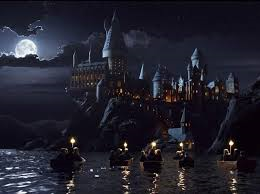
A. Captain Jack Sparrow. Not sure how long it would last though!
Q. A nuclear war is starting and you can only save two characters from Runners. Who do you save?
A. I can’t choose between my babies! Not from an emotional viewpoint anyway, but purely on evolutionary terms, Xavier and Rosa, because they’d be the strongest two, physically and mentally, to repopulate the planet!
Q. If you could have another character from another book make a cameo in yours, who would it be?
A. Peeta from The Hunger Games would be quite handy in Runners, he’d be able to make them all dinner!
Q. Five authors you would have at a dinner party (alive or dead)?
A. I want to say all the authors I know from Twitter but I suspect that’s not what Victoria means! In which case I’m going to say John Connolly, Neil Gaiman, H G Wells, Charles Dickens and Jane Austen. Ask me another day and I’ll have a different five!
From Jack Croxall
Q. Which of your characters do you fancy the most?
A. I recently finished an NA book that is currently out to agent and I really fancy Dante, the guy from that book. I deliberately made him fanciable, complete with Irish accent and everything, after all, if you can’t imagine your own perfect man, who can?
 Q. Which is your favourite Pokemon and why?
A. I’m so boring, I know, but it’s Pikachu. He’s just too adorable!
From Jaimie Admans
Q. Which of your characters do you hate the most?
A. It has to be Maxwell Braithwaite from Runners. He’s just nasty through and through and with no other motive than greed.
Q. How about if you could only save one character from all your books?
A. This is just evil! If I really had to choose one, I would have to choose the character I think could do the most good if they were allowed to live. I think that would be Jacob from Sky Song.
From Victoria Loves Books
Q. What’s your favourite flavour Pringle? #hardestquestionyet
A. ha ha, that’s actually easy. Paprika, I’m addicted to them!
Q. If you were queen for a day and could make a bank holiday where people had to do one thing, what would it be?
A. Clearly, if I was that egotistical, I would make everyone read one of my books…. Ok, so I’m that egotistical.
Q. Where is your favourite place in the whole world?
A. There’s a little stretch of beach on the Dorset coast (south of England for our friends not in Britain) between Bournemouth and Boscombe, and it’s right there.
Q. If you had to pick a character from one of your books to come and live with you, who would it be?
A. It would definitely be Peter Karlsson from The Jackie Chan Fan Club. He’d be super polite and helpful and very interesting and basically a dream house guest.
Q. If you had to eat 100 marshmallows to save Jacob (Sky Song) from dying, would you do it?
A. Ha ha, everyone knows my Achilles heel, I detest marshmallows! Of course, I would have to, though, or I’d have Ellen to answer to!
Q. You either have to kill Colin Morgan or all of the characters from Runners. Who dies – you decide!
 A. You people are horrible! Kill Colin Morgan? I couldn’t kill Merlin! Kill all the characters from Runners? Noooooooo! I don’t know, can I have another question?
From Jack Croxall
Q. Who would win in a fight, Jacob (pre powers), Elijah or you?
A. Ha ha, if I was logical about this then I would say me, as I could simply write them into oblivion! Apart from that, I’m a proper nelly and so is Jacob so it has to be Elijah, who is actually small but pretty handy with his fists, as Xavier would attest to.
From Dan Thompson
Q. Who did you prefer to write – Jacob or Elijah?
A. That’s tough but I have to go with Jacob, if only for the fact that I’ve been writing him for a lot longer and he’s sort of grown up from my pen. There are some scenes in the later books that were an absolute joy to write, especially the epilogue of the final one. I’m looking forward to writing Elijah again though for the Runners sequel.
Q. Apart from Elijah, which character did you most enjoy writing in Runners?
A. Actually, it’s a double act! I loved the banter and sibling rivalry between Xavier and Francois and really enjoyed writing that.
Q. Who is your favourite baddie/villain in fiction?
A. That’s a tough question. I think Mrs Coulter from Pullman’s His Dark Materials is a brilliant baddie, she’s so complex, but there are absolutely tons that I could put on equal footing with her, especially from classic fiction, if I really thought about it for any length of time.
From Ken Mooney
Q. As a fellow English grad, do you ever feel that studies kill off the desire to write?
A. Actually, I found that my desire to write increased as my confidence in my ability to write did. I wrote my first few novels as an undergraduate and have never really stopped writing since, apart from a couple of years where I was so busy working as a fiction editor that I didn’t have time. What studies did do was change the way I read, and sometimes I’m not sure it was for the better. I’m certainly less satisfied with books that I would have once read and enjoyed than I was before I did my English degree, and that seems like a shame in many ways. It’s easy to see how people can become book snobs; although I do try to look at every book I read with a detachment from what I know about ‘literature’, sometimes it’s hard not to judge on that basis. I get quite annoyed that I often find myself mentally editing some books as I read them too! Usually, there’s nothing wrong with them either! And literary fiction is not what I write, nor is it what I want to write, so it’s strange that I now often think about fiction in that way.
Guest Post: Writing A Series by Sharon Sant
With thanks to the lovely Dan Thompson for asking me to write this guest post
I don’t know – Jack Croxall talks parallel universe theories for Science in Fiction week
It Friday, YAY! But it’s the final day of Science in Fiction week, boooo! We’ll just have to do it again some time. Last, but never least it’s the turn of the awesome Mr Croxall ,with his contribution on a subject that absolutely fascinates me. Take it away, Jack….
‘I don’t know.’ This is the default position of science. If you ask any half-decent physicist how the universe came in to being, they will say ‘I don’t know but here are some theories.’ Likewise, if you ask any biologist what colour a baby archaeopteryx was, they will probably say ‘I don’t know, but I can speculate.’ The lack of absolutes is what makes science great and what makes the scientific process so encompassing and so (mostly) open-minded. By a happy coincidence, it also leaves a lot of mystery and a lot of room for guess work, and this is where our good friend fiction comes in …
Because so much of our scientific understanding is far from complete, authors can take a scientific concept, and flesh it out however they want. In 1963 a physicist named Hugh Everett published a new theorem, The Many Worlds Interpretation of Quantum Mechanics. His radical new idea proposed that, thanks to some incredibly clever calculations and observations, our universe must surely not stand alone. In fact, Everett’s groundbreaking theory proposed that there are actually an infinite array of other universes existing parallel to the one we call home. Whilst the theory was criticised at the time, it has since gone on to gain a huge following with notable scientists likening the significance of Everett’s work to that of Einstein’s.
Fast forward to 1995, when Philip Pullman, inspired by Everett’s work, published the first edition of His Dark Materials. The series takes place across an array of parallel worlds with the central duo being able to cut openings and travel between them. Now, Everett’s theorem says nothing about what any of these parallel worlds are actually like and so Pullman was able to imagine them however he wanted. Daemons, armoured bears, witches; all of Pullman’s sublime characters would not have been able to light up the world of fiction if Everett had not published his ideas thirty years beforehand.
So, at a glance, it’s perhaps easy to think of science and fiction as poles apart but, in my experience, this is far from the reality. In fact, it was Pullman’s work which inspired me to start writing fiction and simultaneously helped fuel my love of science. Are Pullman’s ideas anywhere near the truth? Well, I don’t know. What I do know, however, is that our world is all the better for them.
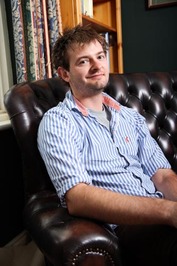 A YA Victorian fantasy, Jack Croxall’s debut novel, Tethers follows Karl and Esther as they become embroiled in a conspiracy engineered by treacherous Victorian scientists. The book is available through Amazon and you can find out more by visiting: www.jackcroxall.co.uk or the book’s GoodReads page.
Reaper’s Rhythm blog tour – author Clare Davidson talks about her inspiration and juggling demands
 I recently got a very exciting offer that I couldn’t refuse, and that was to host Clare on the blog tour for her new book release, Reaper’s Rhythm. As I was lucky enough to read this book in advance of its release, I was only too happy to oblige. So, without further ado, here’s the transcript of our little virtual chat…
Hi Sharon, thanks for letting me stop by for a chat.
Q. I have my magical pink writing cardigan. Do you have any writing rituals or things that you like to have around you to help focus you when you sit down to a WIP?
A pink writing cardigan sounds lovely and comfortable.
I’m not sure I have any rituals exactly, but I always sit in the same chair (from Ikea) and I’ll often have the TV on for background noise. I love distractions and hate silence. Obviously I always have my laptop. If I have a reference picture for a character or scene, I’ll make sure that’s visible somewhere too.
Q. I know that you have an incredibly demanding home life with your day job and family, how do you balance that with your life as a writer?
By neglecting my husband? Actually at the moment it helps that my husband is working away during the week. Yes, I miss him like crazy, but it means that for three evenings every week I’m home alone (I have friends over on the fourth), which gives me time to write, edit, format, or work on marketing/promotion. My daughter also gets three free pre-school hours each day, so on my two days off a week, I get that block of time for writing and related stuff, too. I’m not quite sure how I’m going to juggle things quite as well over the summer holidays, though!
Q. The premise for Reaper’s Rhythm is a highly original one. Can you remember the exact moment when the initial idea came to you? Where were you and what were you doing?
I’m glad you like the premise. I was at home, sitting in my chair, feeling pretty down about writing. I’d been waiting for feedback on another WIP (which never came. To be honest, I don’t blame the critique either), which was a mid-grade urban fantasy. I decided I needed a “for fun” project to get myself out of my writing funk, so challenged myself to write a darker version of the story, in first person present tense. As it was a fun project, I just started writing about two sisters, walking home on a dark winter night. The story evolved from there. For ages, I referred to the two stories as “light Kim” and “dark Kim”. As you’ve probably guessed, “dark Kim” won and became Reaper’s Rhythm.
Q. Your covers are quite striking, almost vintage in feel. How closely do you work with your designer to realise your vision?
Thanks! I love both my book covers too, which is why I’ve continued to work with the same illustrator and I’ve commissioned extra bits of artwork for both Reaper’s Rhythm and Trinity. With both books, I gave him the blurb, some character details and my own vision of the cover. For Reaper’s Rhythm, I also gave him reference photos for Kim and Matthew. He then works with that to produce a pencil sketch for me to approve (or not). He sends me several “in progress” versions, so I can make suggestions or ask for any changes along the way. I’m really lucky that my illustrator, Bramasta Aji, is great at realising my vision, from just a small bit of information. He’s surpassed my expectations and my original vision both times.
Q. Reaper’s Rhythm has a contemporary setting, where your previous novel, Trinity, was more of an epic fantasy. Was it a conscious decision to make the new one so different?
I’m not sure it was so much a conscious decision, as a subconscious one. The idea for “light Kim” popped into my head while I was on holiday in August 2011 and I just ran with it.
Some quick fire to shake things up!
Tea or coffee?
Neither. The only hot drink I like is hot chocolate.
Twitter or facebook?
Both? I used to spend more time on Twitter, but lately I’ve been using Facebook more.
Heels or flatties?
Flatties. How does anyone walk in heels?
A dinner party with six guests of your choice, living or dead, who’s on your invite list?
Edward I, Eleanor of Castille (his wife and my daughter’s namesake), Edward III, River Phoenix, Jonathan Brandis, Tamora Pierce. Spot the history theme in that list!
What book do you wish you had written?
I’ve been asked this before and gave a boring answer then – my own!
If the devil offered to take your soul in return for JK Rowling type success, would you strike the deal?
No.
***
Thanks so much to Clare for stopping by. You can find out more or get your copy of Reaper’s Rhythm at the following places:
America:
UK:
Paperback:
Throughout the tour there’s also a giveaway, which you can enter here (which is also where you can visit Clare’s website) or you can find her on Twitter for more chat.
The Science of Horror – Eleanor Reynolds discusses the evolution of science in fiction
To the non-scientist, science can be scary. It’s a many headed creature, devious and cunning; what is once thought to be fact can be refuted years later, the search for the ultimate truth being full of pitfalls, twists and turns. Scientific experimentation is carried out largely behind closed doors and announcements about new discoveries often seem to be written in a language impossible to understand. Science is mysterious, secretive, and these elements provide excellent material for horror writers. Out of the Gothic genre, so popular in the eighteenth century, came a new breed of horror story: tales of the scientist and his mad schemes.
 The character of the crazed scientist has become synonymous with Frankenstein, arguably the first story of its kind, written by Mary Shelley in 1818. Victor Frankenstein, a student of medicine in Ingolstadt, becomes obsessed with the idea of creating life. He robs graves for parts, stops eating or speaking to his family and shuts himself up in his laboratory with his unearthly project. At the time of publication, all Europe was buzzing with newly-found static electricity, so wonderful it was rumoured to be the very essence of life. Public demonstrations were carried out by scientists who rigged the corpses of criminals to their electrical machines and made them writhe and dance.
Fast-forwarding to the end of the nineteenth century, another fictitious scientist emerges to become almost as famous as his Swiss predecessor: Doctor Jekyll and his alter-ego Mr Hyde. Victorian London was a dark, gloomy place; it stank and it was covered with a thick fog in which lurked hundreds of criminals. So high was the crime-rate in fact that a new branch of biological science was founded, that of Criminology. Following on from Darwin’s theory of evolution, scientists asked themselves whether criminals were closer to the animal kingdom than other humans and worried that a beast lurked inside all humans waiting to break out. With a chemical concoction, Dr Jekyll can call up his inner beast, Mr Hyde, whenever he wants – but sending him away again proves more difficult.
Scientific discoveries raise hundreds of ethical questions and it is often authors at the forefront of these discussions. Horror stories are exciting but the best ones scare us because they ask the question “What if?” From Doctor Moreau, genetically modifying humans on his secret island, to anatomists paying murderers to supply them daily with fresh corpses, there is a story for every uneasy thought we have ever had about science.
***
Eleanor Reynolds has a Masters in Science Communication and a particular interest in Science and the horror story. She is currently writing her first novel, tutoring Science and making clothes in her spare time. You can follow her on her personal blog http://dresstoexpress.wordpress.com/ and on Twitter
Science and Social Media – crime writer Rebecca Bradley examines how we all stay connected
Today it’s the turn of crime writer, Rebecca Bradley. Her debut novel, Shallow Waters, is currently at the editing stage and I, for one, am excited to see its release sometime very soon. Here’s what she had to say about science in fiction:
We live in a connected world. If you’re reading this, you are one of those people who engage fairly well with technology and social media.
Many years ago – of which the amount I won’t go into – when I was a child and young adult, the mobile phone wasn’t in existence and when it did emerge, it was as large as a house brick with an even larger battery that you had to carry around with it. How far we have come.
Today you can’t walk down the street, go on the bus or the train, even walk in a shop or a restaurant without seeing people connecting with others by means of the phone in their hands. You see, not only have we surpassed the poor brick like phone where you could do nothing more than make a call, many of us now carry a small computer in our pockets. So when you see people hunched over their phones, it’s probably not even a text message they’re sending, they are more than likely connecting a lot wider than a one to one conversation, it’s probable that they’re talking on their social media sites.
I love science. It fascinates me. Every aspect of it. It is science, therefore it has answers, but for me it just seems magical. The power of knowledge and what we can do with it. Lives we can save, – as well as those we can take, I’m not going to pretend it’s all for the good – steps forward in every area imaginable. It has many answers, but it also has many more questions. (And this is also something I love. We should never stop asking questions.)
Because of science we can now carry a thousand books in a few millimetre thick hand-held device, we care share our love of books with people we would never otherwise have met, we can have discussions like this simply by sitting in our own homes and turning a device on. With the evolution of video conferencing scientists around the world no longer have to travel thousands of miles just to talk to each other. The social and the science truly has come a long way since the time of the house brick phone and battery.
But for me, the ultimate in the social and the science blending together was the recent space station mission led by Canadian astronaut Commander Chris Hadfield. While on the International Space Station, Commander Hadfield not only live tweeted amazing photographs taken from aboard the space station, but he created some fantastic video’s and uploaded them to YouTube, including a video of him being interviewed by a classroom of school children. Can you imagine being one of those children and engaging this way for a science lesson?!
One of the video’s I’ve watched is a live interview about the power of social media outreach. Please watch this short clip to see the power of social media and science at work. It is absolutely stunning.
Rebecca works at a full time day job and is a mum, who uses her spare time to commit murder, while drinking copious amounts of tea. Without each of these things, the other could not possibly exist. The world does not spin without first having a cup of tea in a morning, never mind the complexities of rising, working and writing.
She is represented by Kate Nash of the Kate Nash Literary Agency and working on the revisions of her first crime novel, which has a working title of Shallow Waters and is set in Nottingham. The lead protagonist is a female DI. You will find a page on the blog Here, with photographs taken in and around Nottingham where the crime fiction novel series is to be set.
***

You can catch up with Rebecca on her excellent website or follow her on Twitter
Dan Thompson talks phobias – Yes, it’s science in fiction week!
Yay! Science in Fiction week finally kicks off with Dan Thompson talking about phobias, something he knows lots about since he released his book about them: The Caseworker’s Memoirs. Take it away, Dan!
Phobias are wonderful things … OK, maybe not wonderful for the people who suffer from them, but let’s face it, who doesn’t want to know more about koumpounophobia when it is mentioned to them? It’s the fear of buttons, by the way, which is absolutely extraordinary. But whether or not if the fear is weird and out there, or something as common as Arachnophobia, phobias remain an untouched area of psychology when it comes to literature.
Psychology in fiction has seen some really good exposure in recent years, thanks to some unique viewpoints on behalf of the authors. Emma Donoghue’s Room is one such example. A novel told from the eyes of a young boy who lives his life inside of one room. What’s unique about this story however, is how the same story has different connotations depending on who looks at it. The room is all that the boy knows, and life is simple. His mother, who is also trapped inside of the room, on the other hand suffers from her ordeal at being held captive inside, whilst trying her utmost best to give her son some sort of life.
And although phobias are rare inside fiction today, it was my interest in how personal phobias are to the people who suffer from them, and yet seen in completely different light by somebody else, that fascinated me and spurred me on with writing my new release, The Caseworker’s Memoirs. Told through the eyes of Malcolm, a retired counsellor and recently widowed. He is a broken man, letting the world pass him by, until his daughter intervenes and gives him a leather-bound notebook. As Malcolm starts to write down his memories, he is troubled by the fears and phobias of the patients who he used to treat. This gave me a fantastic structure to include so many enthralling and intriguing fears.
By delving deep into the psychology of these irrational fears, I was able to portray how different people respond to their fears. Candace Levine is a wonderful character, who has no choice but to fight her fear head on, for her life depends upon it. Neil Marshall is a successful author who cannot leave the house, and yet this situation allowed me to follow the dark path into depression and medication addiction. Understanding the current cultural and sociological issues that face us today is also a science, and one that gave me ample opportunity to explore through phobias too.
Getting the right balance between suspense and intrigue was a battle I often fought with myself when I was writing The Caseworker’s Memoirs, and hopefully I’ve succeeded. As fears and phobias are psychological issues, it was important for me to write stories that the reader can understand themselves, and perhaps make them question their own fears and beliefs. For even the greatest of us are a little afraid of something – Alexander the Great was allegedly reported to suffer from Ailurophobia – the fear of cats. What’s your phobia?
***
 Dan Thompson lives in Gainsborough, Lincolnshire with his young daughter and his shabby dog, Skye. He is the author of the charity poetry book Life is All but a Vast Array of Colours and phobia novella The Caseworker’s Memoirs. His first full length novel, A YA fantasy entitled The Black Petal, is currently in the hands of his editor and will be available soon.
A lover of YA and fantasy fiction, you can often find him writing on his blog, writing book reviews and connecting online with other writer-type people. Dan grew up reading Enid Blyton’s The Famous Five series, secretly coming up with his own inventive adventures, and R.L Stine’s The Goosebump series, before turning to the works of Philip Pullman, Eoin Colfer and Marcus Sedgwick and slipping away into alternate realities. He also loves a good Historical Thriller too.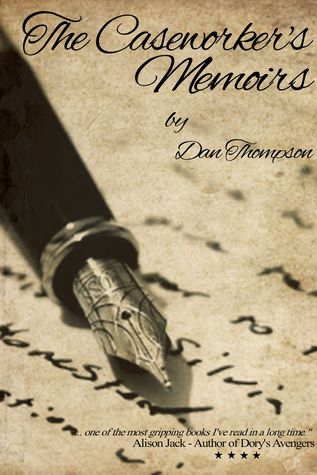
You can keep up to date on his website danpentagram.wordpress.com and he tweets on twitter under @dan_pentagram – you can also follow him on his Author Facebook page facebook.com/theblackpetal
The Caseworker’s Memoirs is available in both paperback and ebook from Amazon and Waterstones.
E=M…. something or other….
 I’ve always been fascinated by science, so it’s a crying shame that I’m too dim to understand how it works beyond a really basic level. I read ‘layman’ books about science and I watch those TV programmes full of pretty pictures (or equally pretty professors… *cough…. AMAZING*…) that real scientists point at and laugh, and that’s about as far as my understanding will stretch. My book, Runners, has a little bit of science fiction weaved into it which is integral to the plot, though, and I enjoyed the research I had to do for that, so when Runners was released and people began to comment on that aspect of the story, it got me thinking about the way science is used in fiction, not just in a sci-fi way, but in a more general way. Things that get me thinking generally lead to a blog feature, so I put a shout out on Twitter to see if any of my lovely and super-clever writer friends had any ideas on the subject. Today I’m happy to announce that this coming week my blog will be dedicated to the musings of four such people. The lovely thing about all these posts is that they each cover very different areas: Jack Croxall will be talking about parallel universe theories, Rebecca Bradley will be discussing the computer age and mobile technology, Dan Thompson will provide a fascinating insight into the psychology of phobias and Eleanor Reynolds will give us her views on the evolution of the horror genre including a look at Mary Shelley’s Frankenstein. I also have a blog tour scheduled to stop next week, so Thursday will see Clare Davidson talk about her new book Reaper’s Rhythm.
It looks as though it’s going to be a packed one, so I hope to see you around!
What’s Your First Draft Like?

Today in the First Draft hot seat is YA author Sharon Sant.
Sharon was born in Dorset and divides her time between working as a freelance editor, holding down a day job, and writing her stories. An avid reader with eclectic tastes across many genres, when not busy trying in vain to be a domestic goddess, she can often be found lurking in local coffee shops with her head in a book. She loves nothing more than watching geeky TV and eating Pringles. She is the author of several books including The Sky Song Trilogy and most recently a Dystopian YA, Runners.

When you decide to write something new, what is the first thing you do?
That depends on where I am. If I have a cracking idea, you can usually bet I’m in the supermarket queue or driving to work at the time – somewhere where it’s impossible to begin anything…
View original post 1,220 more words
 Sharon Sant